
Name
Lionel Paul Adda
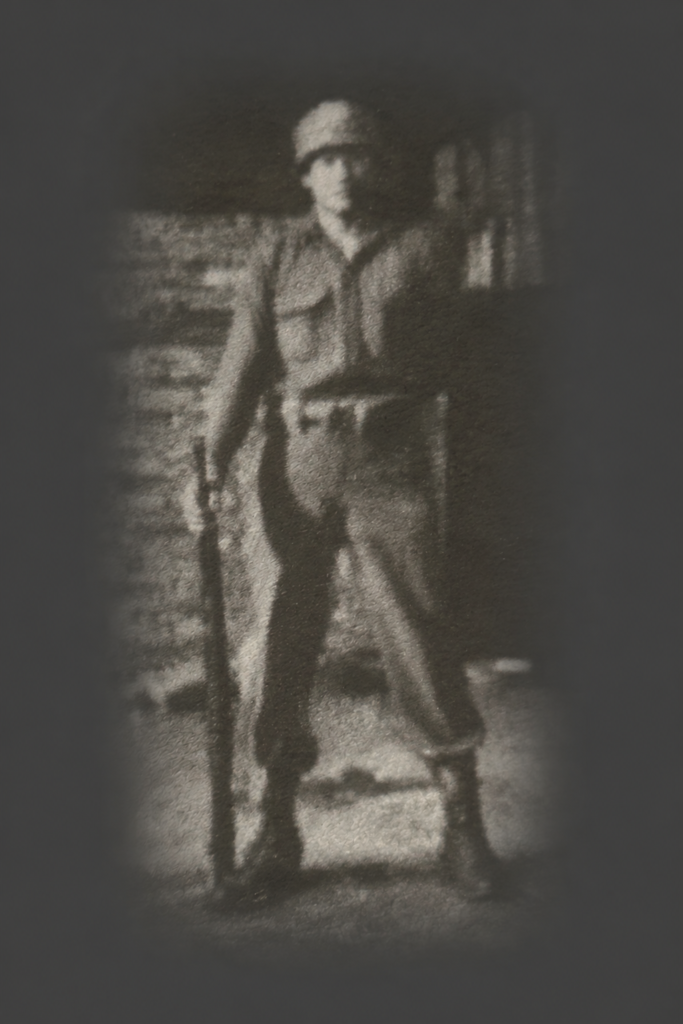
Lionel Paul Adda
33482358
393rd Infantry Regiment / D Company
Battle of the Bulge
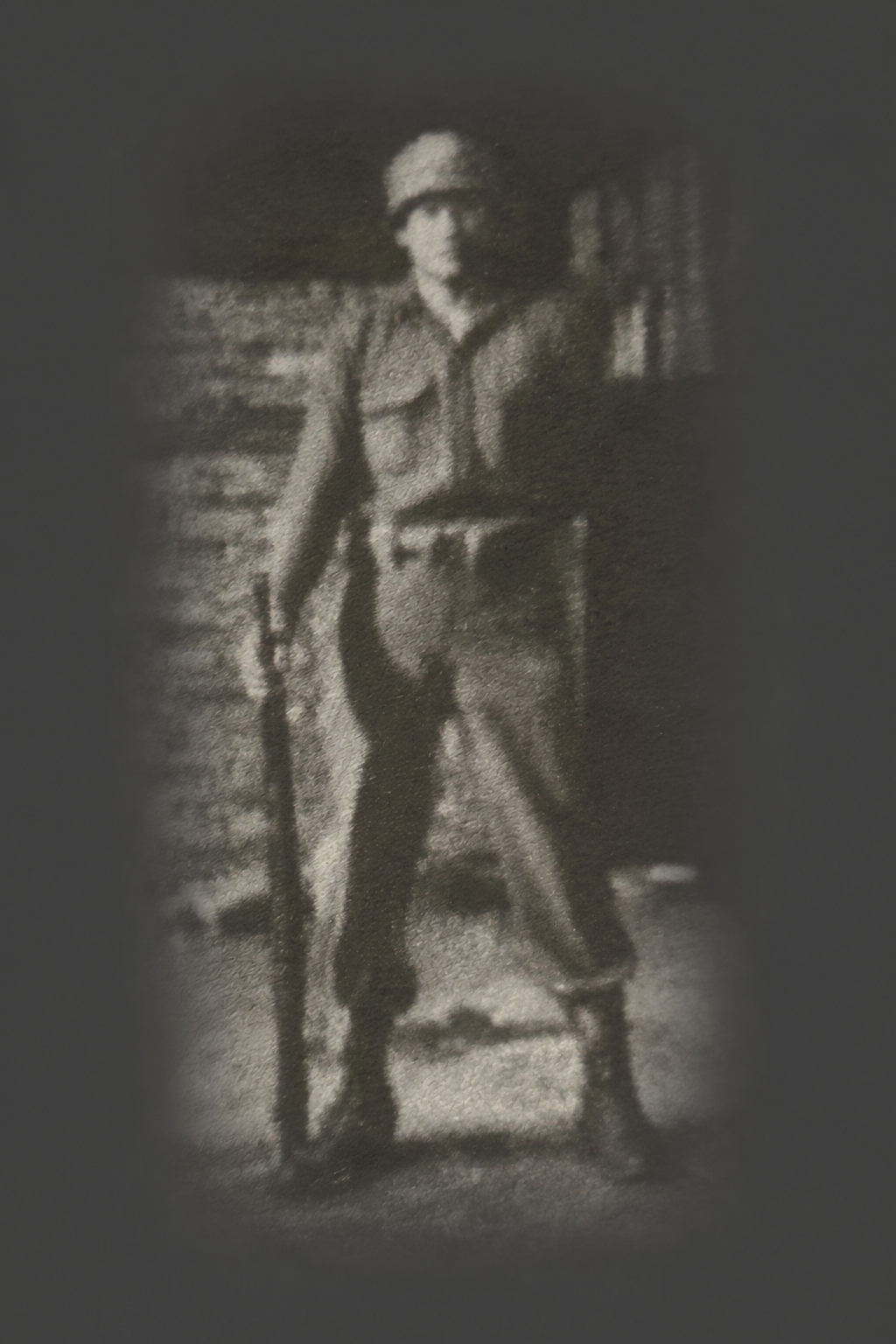
Lionel Paul Adda served in Company D, 393rd Infantry Regiment, 99th Infantry Division. His recorded Army Serial Number is 33482358. Unlike many soldiers whose stories survive only through official records, Adda left detailed first-person accounts of the Battle of the Bulge. They allow us to follow his experience from the opening German attack on December 16, 1944, to an extraordinary and dangerous Christmas dinner on Elsenborn Ridge.
At the Belgian–German frontier
In mid-December 1944, Adda and other men of the 393rd held positions near the Belgian–German frontier. A road ran past their wooded position, with a ditch alongside it and an open cultivated field beyond. Farther away stood the obstacles and fortifications of the Siegfried Line. The terrain gave the Americans a short field of fire, but it also offered approaching German troops cover in the folds of the landscape.
In an account published in the November 1990 issue of The Bulge Bugle, Adda described standing sentry duty from four to six in the morning on December 16. Toward the end of his watch, he noticed an unusually bright glow on the horizon. He considered waking his platoon sergeant, Staff Sergeant Enloe, but the source of the light remained uncertain. Several earlier warnings came back to him: orders to improve the fighting holes, engineers installing trip wires and flares, and reports of suspicious traffic on the German side.
He returned to his sleeping hole, exhausted and cold. Soon the first artillery shell exploded. The bombardment intensified, with fragments bursting among the trees. Adda pulled on his boots and moved into a nearby foxhole as German infantry closed on the line. Both American machine-gun squads opened fire. In the confusion, Adda fired his carbine toward shapes revealed by tracers and flares, while grenades and automatic-weapon fire struck close to his position.
Face to face with the enemy
As daylight improved, the German assault faltered. Adda saw a young German soldier raise his head and throw away his rifle. He called to the man in German and, after Staff Sergeant Enloe ordered the Americans to stop firing, watched him cross the road and ditch into their position. Adda remembered the prisoner's youth, fear, and evident relief that the shooting had stopped. The prisoner was disarmed and sent toward company headquarters.
This was not a simplified tale of battlefield heroics. Adda also described wounded men, surrendering Germans, conflicting reports about what happened to prisoners, and the extreme uncertainty of close combat. His recollection preserves the confusion and human cost of an infantry fight, rather than pretending that everyone present knew exactly what was happening.
Later that afternoon, a renewed attack was feared but did not come. In his account, Adda remembered the composure of Staff Sergeant Enloe, who would later receive a battlefield commission and be killed in action. The next night was spent on alert, with German patrols operating behind American positions. Even after surviving the first attack, Adda and his comrades were far from safe.
Withdrawal through the forest
When the position became untenable, Adda's group fell back. He recalled passing an area with small log shelters, seeing German troops moving American prisoners, and being sent back for ammunition just as enemy soldiers approached. The Americans then began a long movement through misty woods along barely visible paths. The men repeatedly tried to dig in, sometimes without shovels, and often with little understanding of their precise location.
At one point, with darkness approaching and artillery fire nearby, Adda believed he might not survive the day. He described a wounded soldier who asked him for help; unable to do more than encourage him to keep moving, Adda later learned that the man had died. Eventually the group encountered American voices and reached friendly lines. Adda's 1990 narrative ends with the relief of having survived those opening days of the offensive.
Christmas on Elsenborn Ridge
Decades later, Adda returned to another memory. In the winter 2021 issue of The Bulge Bugle, on the occasion of his 99th birthday, he contributed a second account titled Christmas Dinner on Elsenborn Ridge. He recalled that remnants of the First Battalion, 393rd Infantry, moved into prepared positions near the eastern edge of Elsenborn Ridge on December 19, after several days of fierce fighting. There they endured mortar and artillery bombardment and further threats from German forces.
On Christmas Eve, Adda was digging a protective hole. He remembered an unusual quiet. The following morning, as mist lifted, he could see the sun rising near the church tower in Krinkelt. What initially appeared to be a peaceful scene was deceptive: the tower gave German observers a commanding view of American positions.
Rations and water normally arrived after dark. On Christmas Day, however, two American soldiers approached carrying insulated containers from the kitchens. One gave Adda a turkey drumstick; the other handed him bread and two pieces of candy. It was a simple attempt to bring a small reminder of home to infantrymen in their holes.
As Adda began eating, artillery shells landed around his position. He realized that German observers appeared to be following the kitchen men as they stopped to distribute food. The same pattern of fire followed their movement along the line. Adda was disturbed by the danger imposed on men delivering a holiday meal, and he worried about the soldiers at the other positions who had come under fire. What might have been remembered as a welcome Christmas gesture became another example of the hazards of life on the front line.
The account is distinctive because it captures both the kindness and the risk of a very ordinary act. A turkey drumstick and a little bread became part of Adda's enduring memory of the Ardennes. He did not romanticize the incident. His concern was for the exposed kitchen personnel and the infantrymen whose positions were revealed.
After the war: teaching the next generation
After the war, Adda remained committed to remembrance. The museum collection associated with him includes several personal objects, among them an Army Specialized Training Program (ASTP) shoulder patch. An ASTP patch is part of his preserved personal material; on its own it does not establish the dates or details of his participation in that program.
According to the collection's accompanying history, Adda regularly visited schools to speak with younger generations about World War II and share his experiences. His willingness to write detailed recollections many decades after the fighting reflects the same commitment to making the past understandable to people who had never witnessed it.
His published testimony also connects two very different moments: the terrifying uncertainty of December 16, 1944, and the attempt to deliver Christmas dinner amid German shellfire. Together, these accounts reveal the experience of one soldier within the much larger history of the 99th Infantry Division.
Objects preserved in the collection
Personal objects attributed to Lionel Paul Adda, including his ASTP patch, are preserved in the historical collection associated with this biography. These are not simply examples of World War II military equipment: they are artifacts connected with a named veteran who recorded what he saw and later shared his memories with students.
Service details
Full name: Lionel Paul Adda
Army Serial Number: 33482358 (collection information)
Unit: Company D, 393rd Infantry Regiment, 99th Infantry Division
Documented combat: Battle of the Bulge, December 1944
Published first-person accounts: November 1990 and winter 2021 issues of The Bulge Bugle
Collection object: ASTP shoulder patch, among other personal belongings
Historical sources
Lionel P. Adda, “Memorable Bulge Incidents,” The Bulge Bugle, November 1990, pp. 16–18. First-person recollection of December 16 and the subsequent withdrawal.
Lionel Adda, “Christmas Dinner on Elsenborn Ridge,” The Bulge Bugle, Winter 2021, p. 14. First-person account published on the occasion of his 99th birthday.
Lionel Paul Adda A5 museum information panel and collection provenance, supplied by the collection holder. Used for ASN, personal objects and school visits.
Editorial note: The battlefield episodes above are paraphrased from Adda’s own published memories. Individual recollections may contain uncertainty, and the narrative does not claim independent verification of each encounter.
https://www.veteransofthebattleofthebulge.org/vbob/wp-content/uploads/2011/03/1990-Nov.pdf
https://battleofthebulge.org/wp-content/uploads/2021/02/Winter21_Bugle_low-2.pdf
